Access: Research, Negotiation, and Legal Groundwork
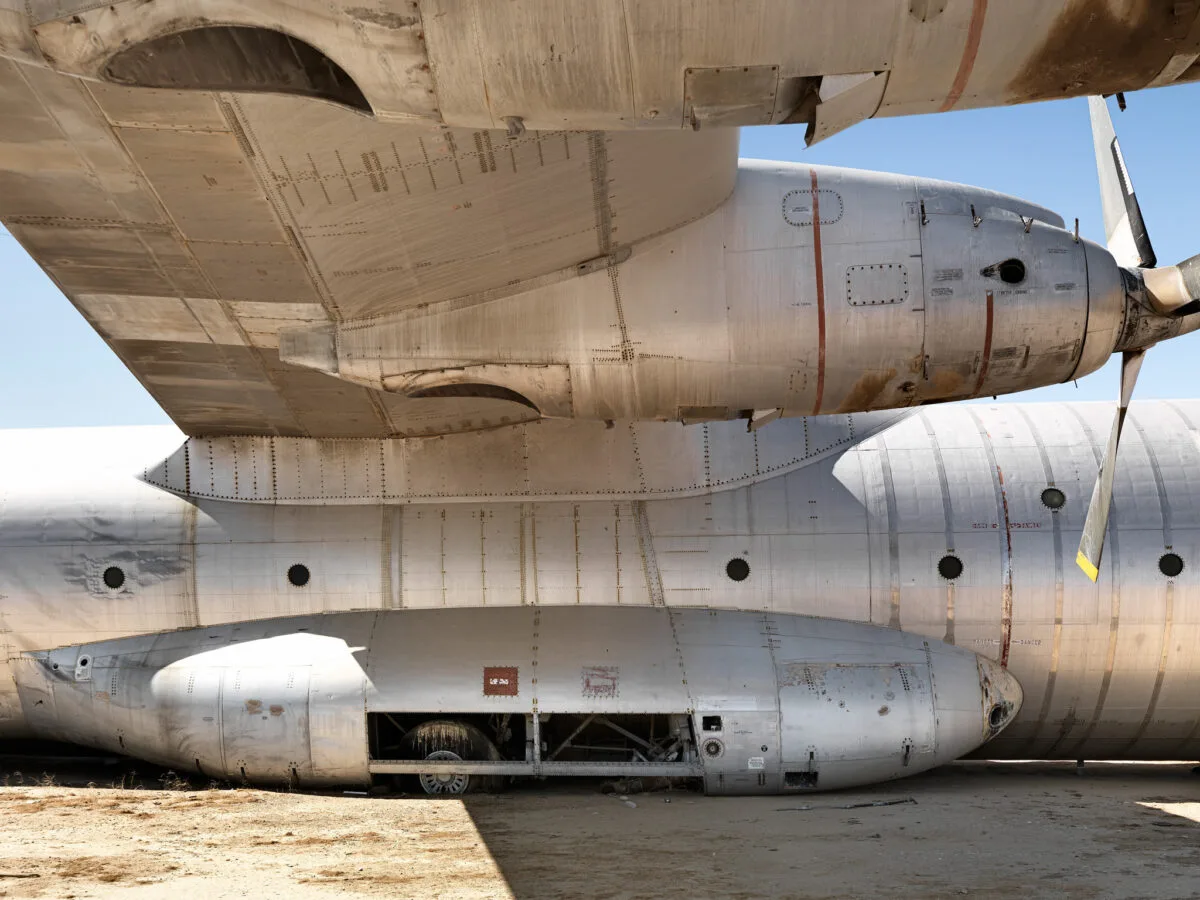
The Mojave facility is not open to the public, and it is not a place that extends casual invitations. Before a single image could be made, we spent months in research: identifying the right contacts, understanding the legal framework around commercial photography on a restricted site, and working through the agreements required by the then-owner, Mike Potter.
Potter, who has since passed away, was an extraordinary figure. He had an intimate knowledge of every aircraft on the field and had personally piloted some of them to their final resting place. Once the paperwork was settled, he guided us across the airfield himself, his Labrador alongside him, telling stories that no archive could hold. His hospitality was as unexpected as it was generous. We have worked in restricted industrial environments before, but rarely with that kind of openness.
On the Ground: Heat, Snakes, and a Desert Windstorm
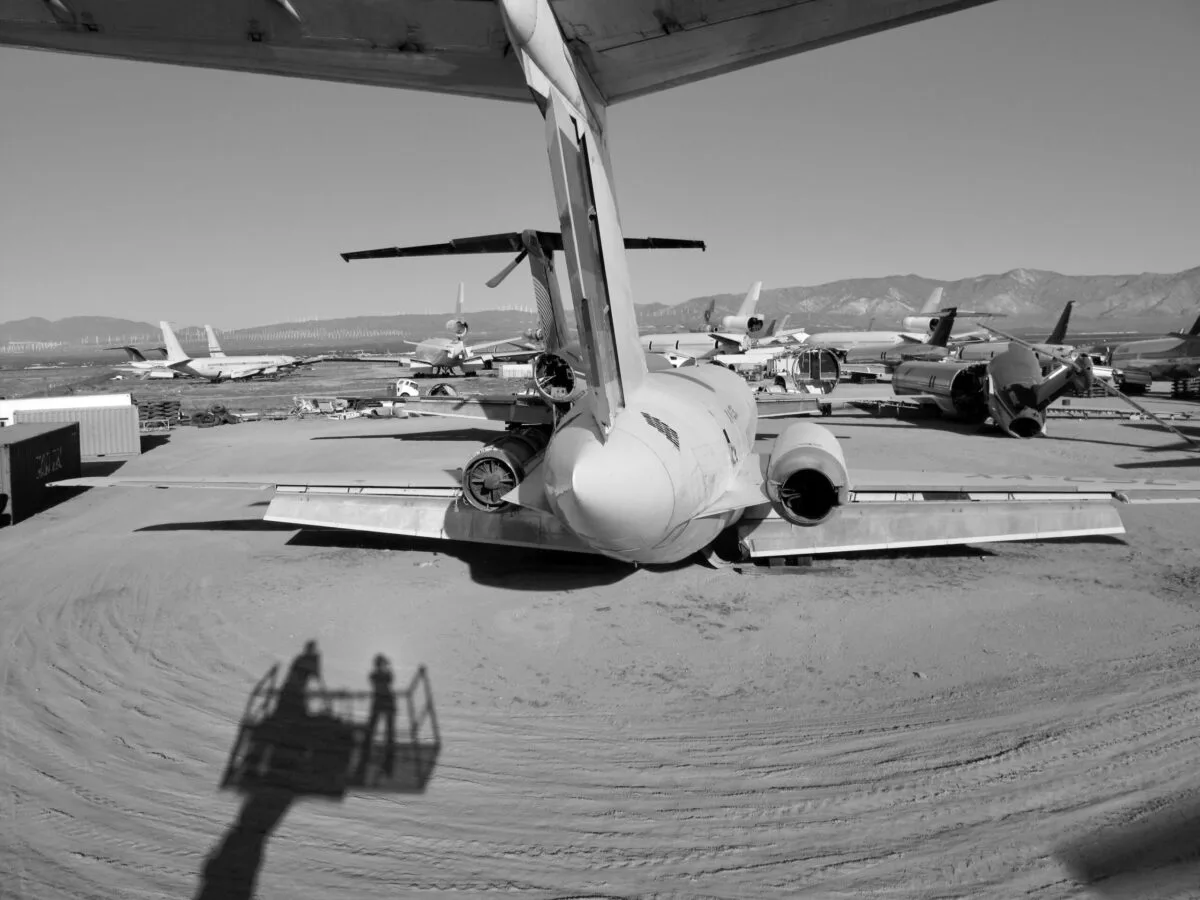
The Mojave Desert is not a comfortable working environment. The heat was relentless, and the ground between the aircraft was territory we shared with rattlesnakes, a detail that sharpens your attention in ways that are difficult to replicate in a studio. Movement across the field required constant care, not only because of the conditions underfoot, but because of the scale and fragility of the machines themselves.
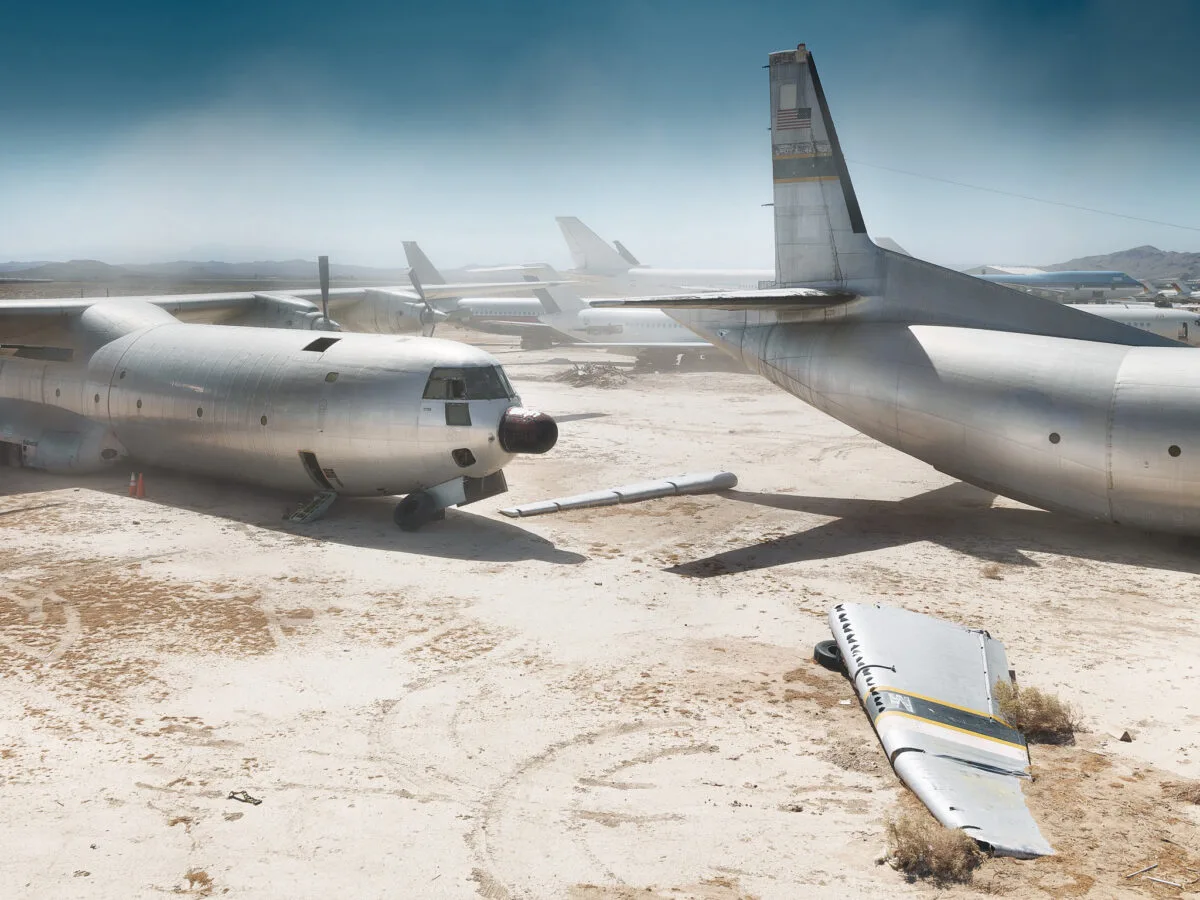
Once, a desert windstorm rolled in without much warning. The dust and the light changed within minutes. One of the images from that day carries the storm visibly: the atmosphere is different, the quality of the air has shifted. We did not plan it. We worked with it.
What We Showed and What We Did Not
The agreement with the facility included certain restrictions on what could be photographed. Some areas and identifying details were off-limits. We respected that without reservation: access of this kind is rare, and the relationship that makes it possible is worth protecting.
But there were also decisions that were entirely our own. Not everything that was visually striking served the project. Certain images were made and then set aside, not because of any contractual constraint, but because they pulled the work in a direction we did not want to go. DECOMMISSIONED is not documentation in the journalistic sense. It is a constructed view of a particular condition. That required choices.
The 24 motifs that make up the final series represent what remained after that editing process: images where the aircraft function as something more than themselves, where the industrial and the elegiac coexist without either cancelling the other out.
The Metaphor of Silent Giants
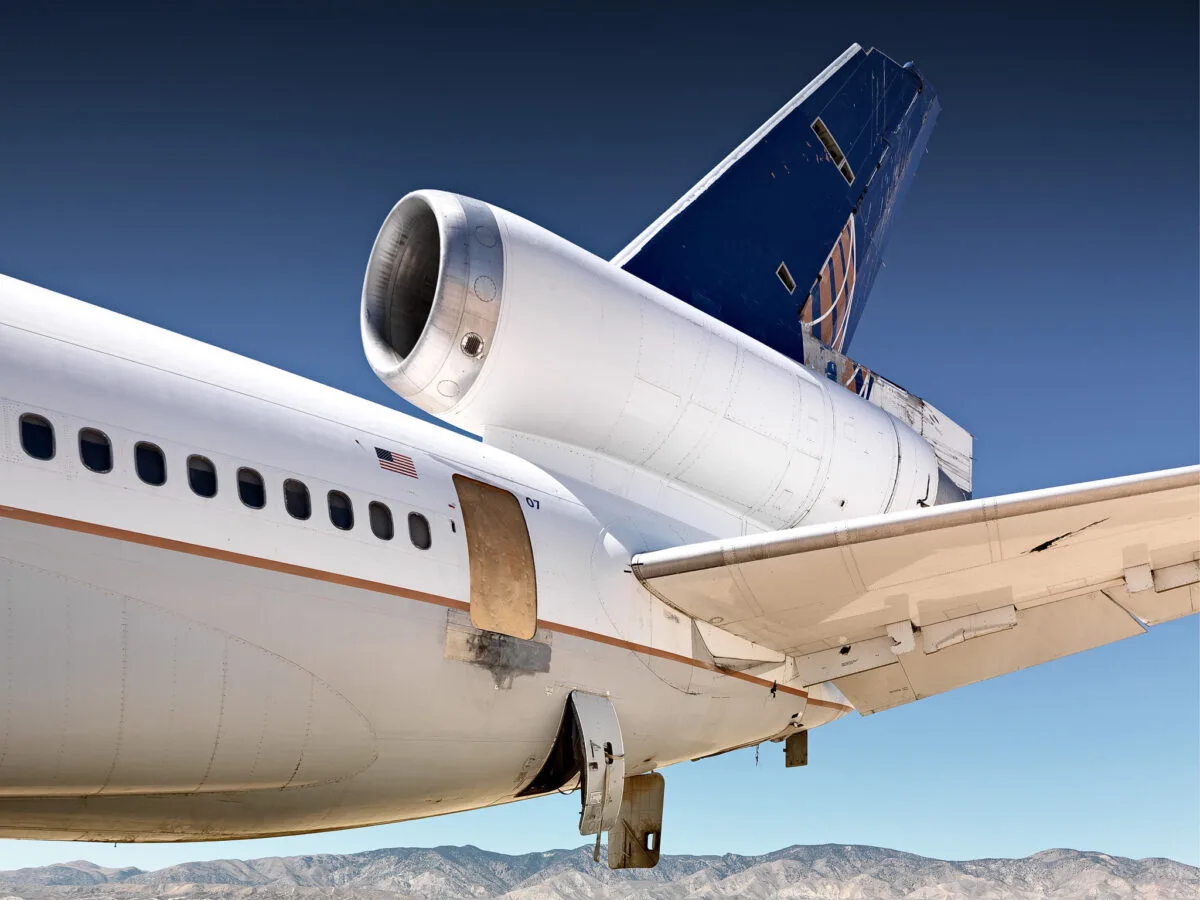
We photographed these aircraft as a metaphor for a system’s dependence on oil and global mobility, a way of making an abstract vulnerability visible. International air traffic had grown exponentially in the decades before this project. The concept of Peak Oil cast a long shadow. These machines, stripped of their instruments and engines, transformed into spare-part stores, made that shadow physical.
Sixteen years later, the project reads differently. What felt speculative in 2010 now reads as an early observation of something that has since become unmistakable: questions around sustainability, industrial cycles, and the limits of the global economy that have only grown sharper.
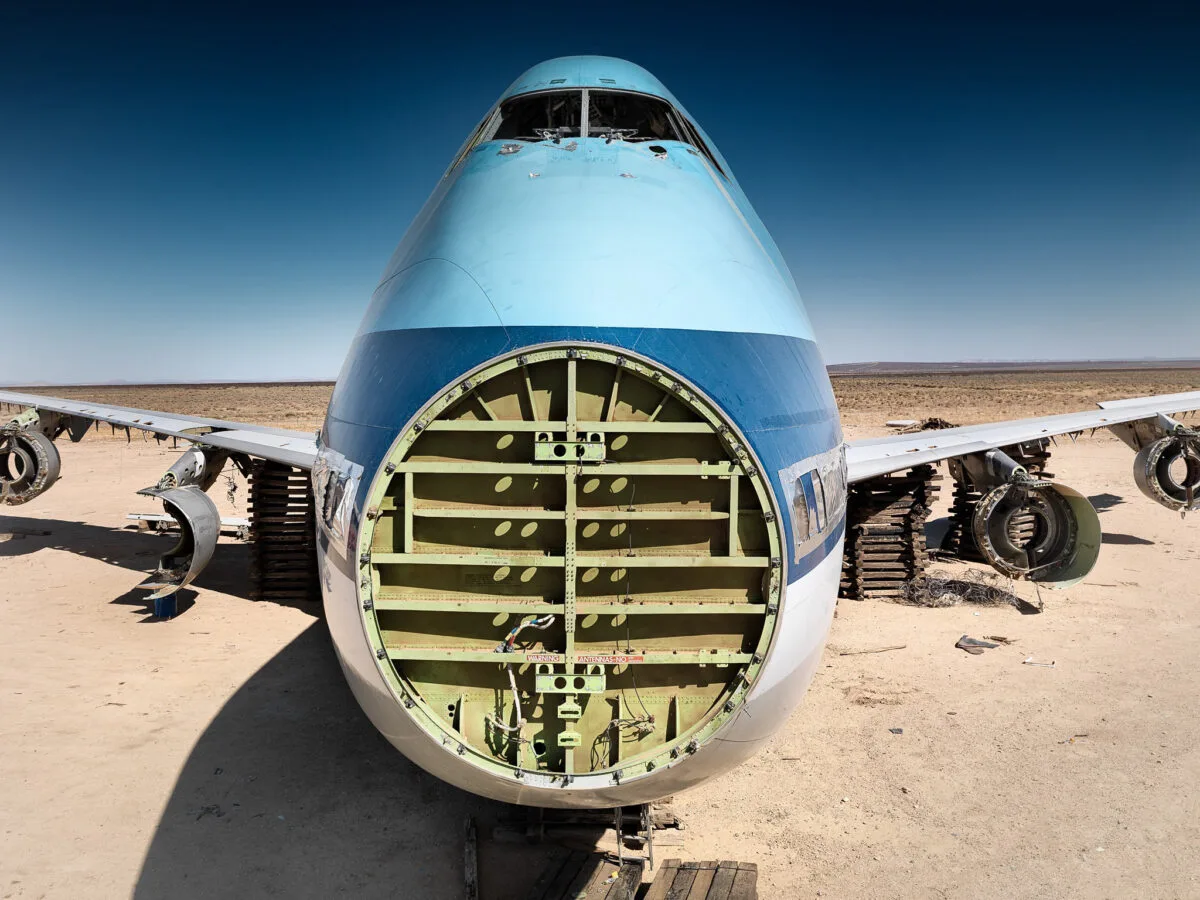
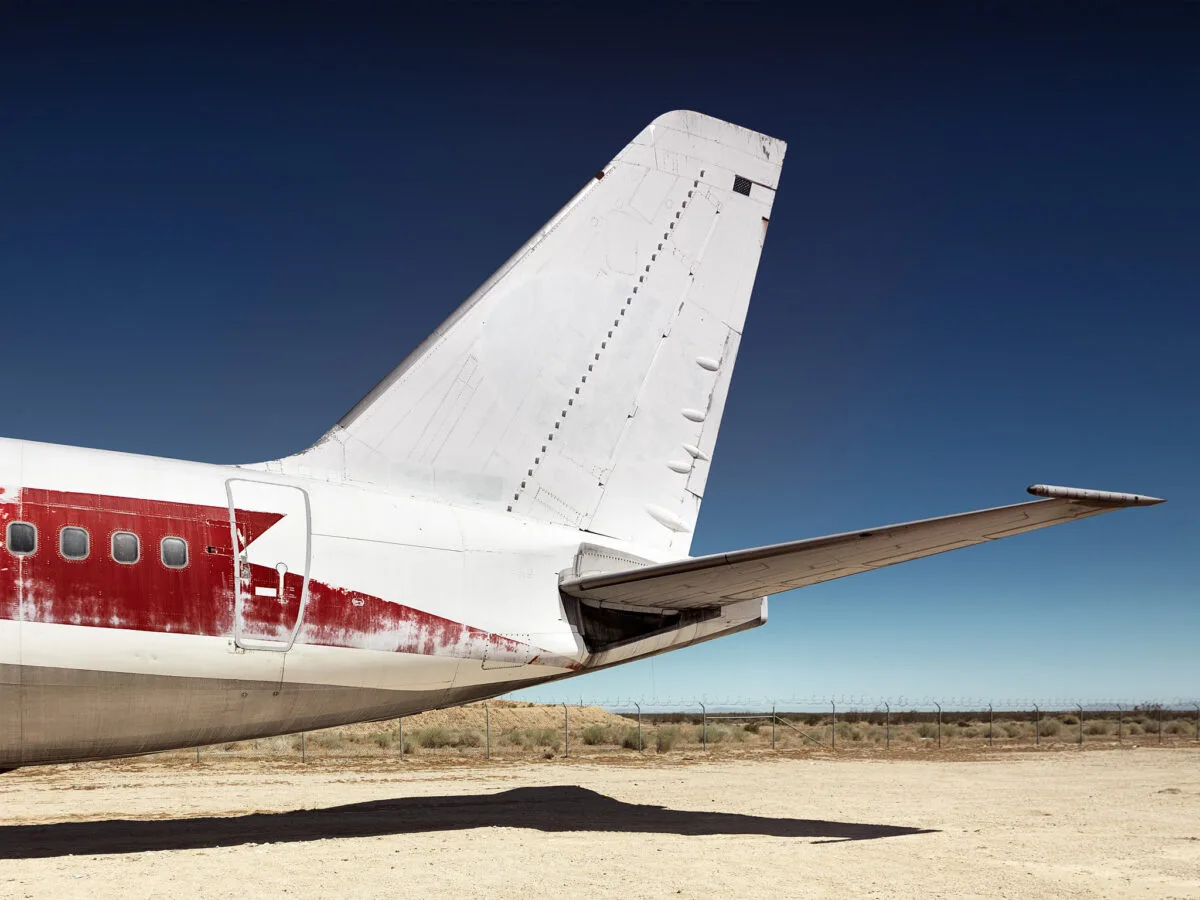
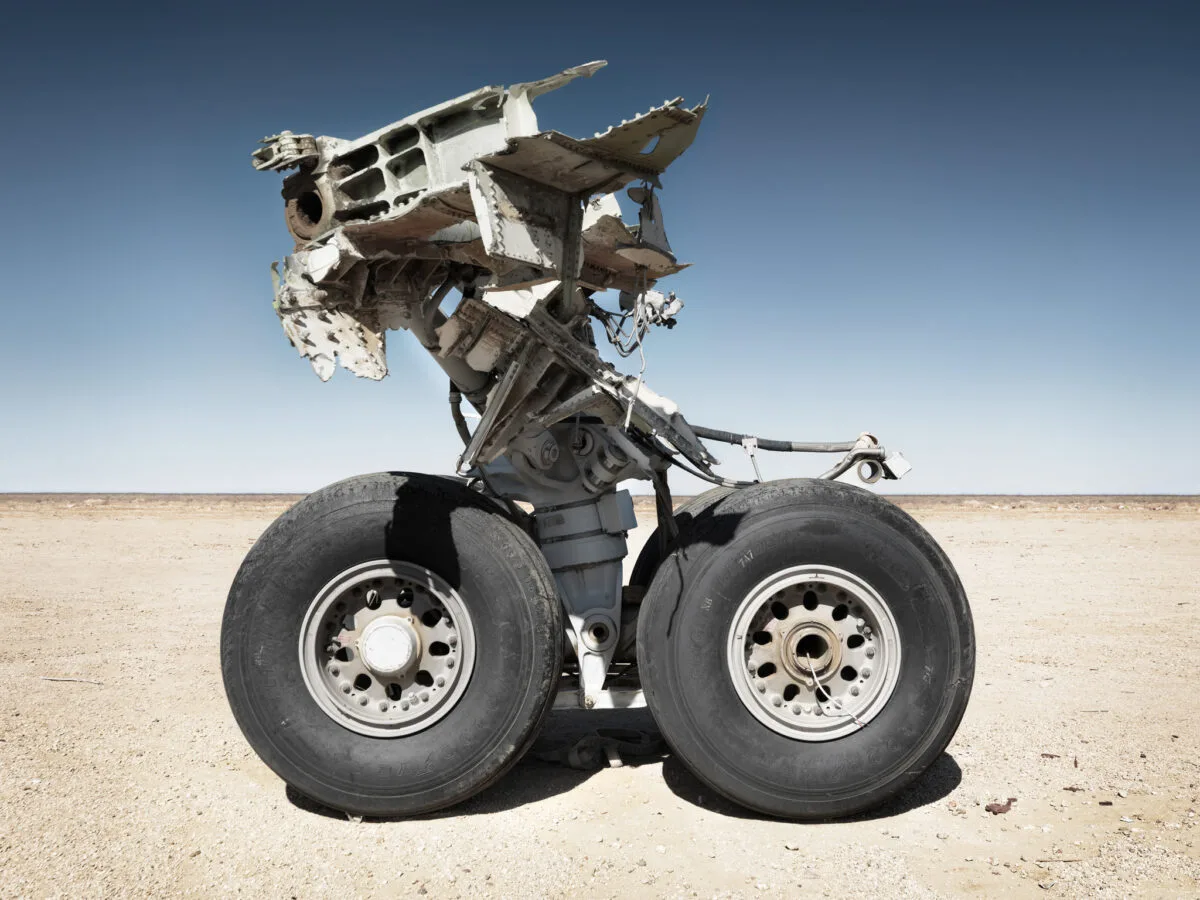
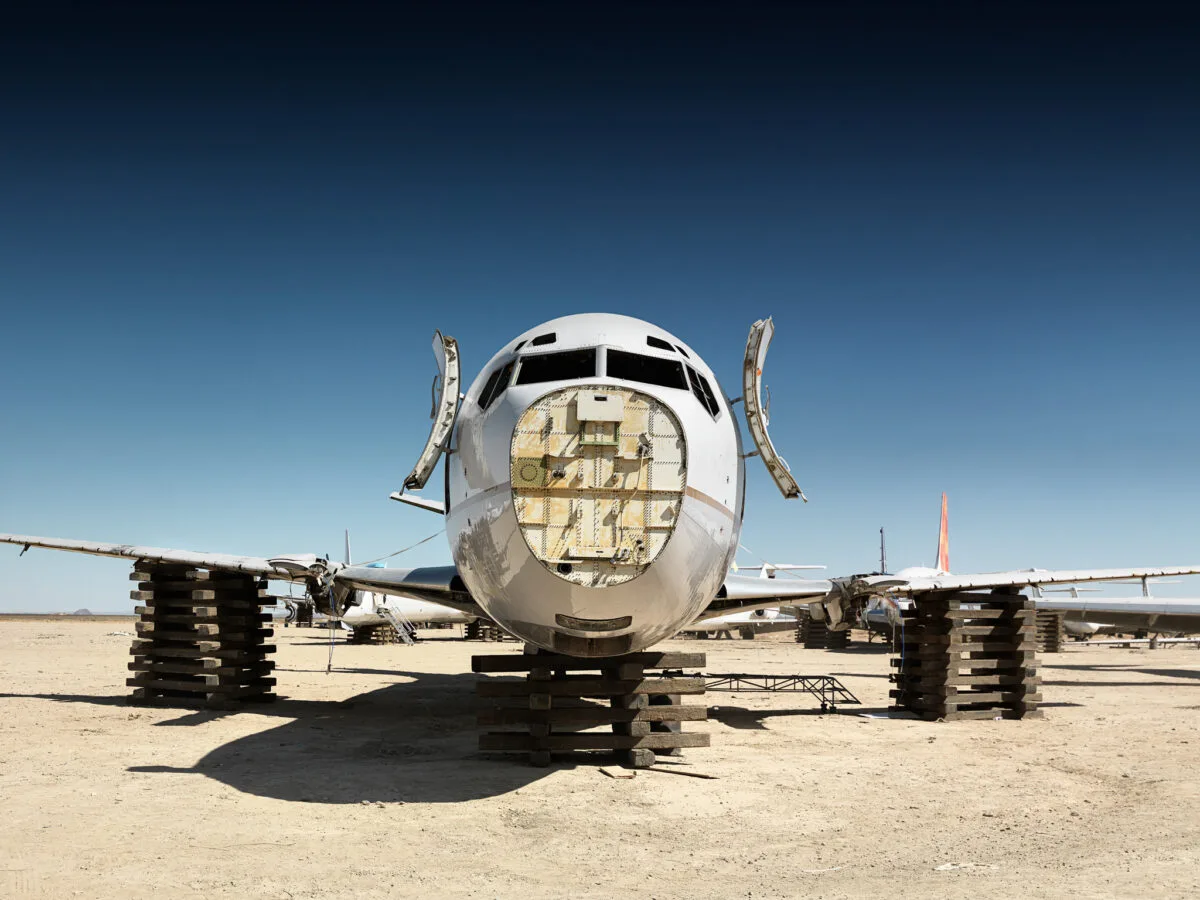
What stays with us from Mojave is the silence between the aircraft, the scale of machines that once crossed continents now standing entirely still, and the realization that every industrial cycle reaches its end. The only question, then as now, is what we choose to see in that moment and whether we choose to look at all.
Exhibitions
DECOMMISSIONED has been shown in international contemporary art contexts:
VFG BILDERSOIRÉE
Photobastei, Zurich, Switzerland
Group Exhibition, March 21, 2023
THE WORLD IS NOT ENOUGH
widmertheodoridis, Eschlikon, Switzerland
Group Exhibition, May 13–July 1, 2017
ICONIC GEOGRAPHY, WORKS 2005–2015
Anteprima D’Arte Contemporanea, Rome, Italy
Solo Exhibition, Feb 25–May 5, 2015
DECOMMISSIONED
Widmer+Theodoridis contemporary, Zurich, Switzerland
Solo Exhibition, Oct 29–Dec 24, 2010
All motifs are available to browse in the gallery.
DECOMMISSIONED is available as a printed book and as limited edition fine art prints, each produced to archival standards with a certificate of authenticity. For editions, formats, and pricing, write to Andreana directly.
To stay informed about new journal entries and projects, subscribe to our newsletter.